Villa Loesch Schutzenstrasse 2 Sonnefeld History
History of the Villa
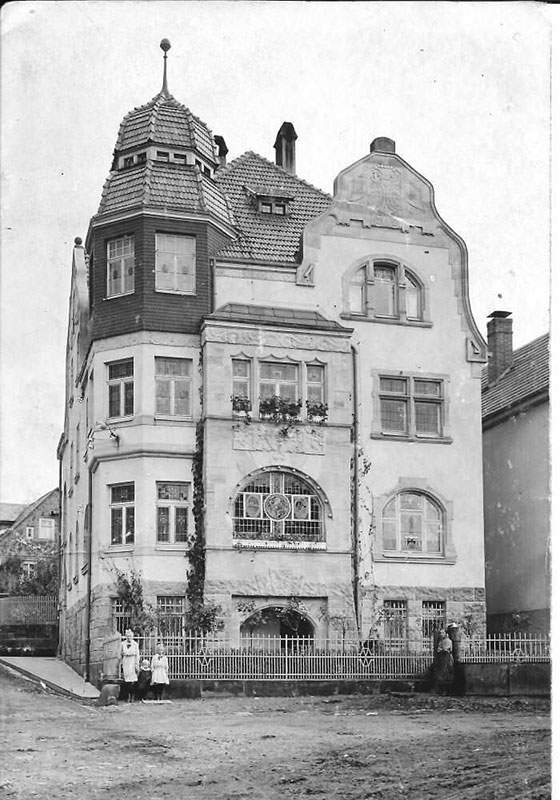
This lovely Jugendstil (Art Nouveau ) Building, built during the period 1912-1913 has quite an interesting story attached to it.
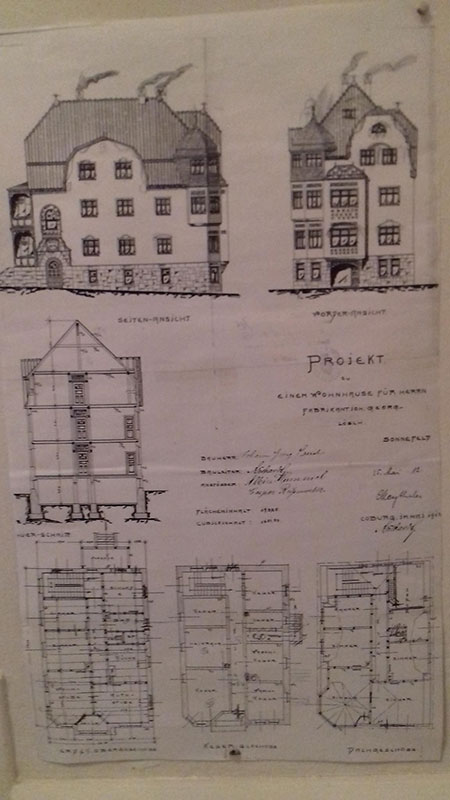
It was the Sonnefelder businessman and factory owner Georg Loesch (1855-1929 ) who came up with the idea in the early 1900's of building a modern home for himself and his children next to his Wicker/Reed- cane furniture (Corbwaren) factory at Schutzen Street.
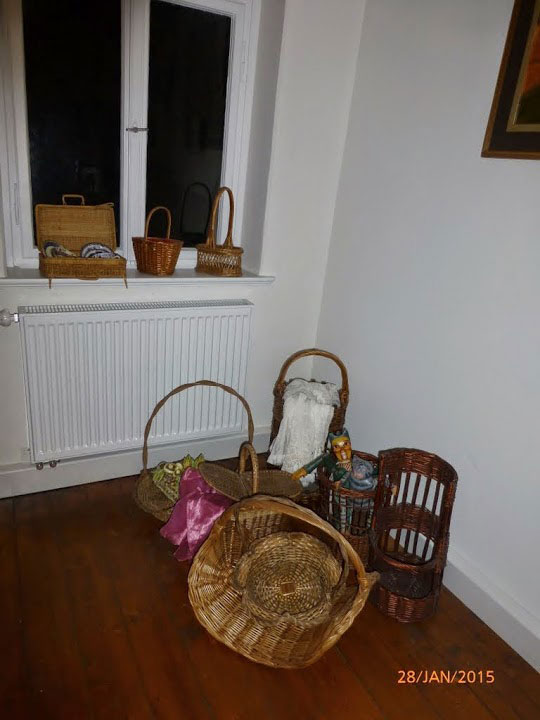
In the 19th century Wicker furniture was very popular throughout Europe. The area of Ober Franken; especially the towns of Lichtenfels, Sonnefeld and Michelau were dotted with manufacturers due to the availability of willows and reeds growing in abundance along the banks of the River Main passing nearby.
Georg set up his business manufacturing wicker furniture in 1879 and at that time was living in a house attached to his factory. As his business flourished and he was earning good monies, he came up with the idea of having a five storey Villa with three apartments opposite his factory, where he could use the entrance floor for himself and the two upper floors for his children.
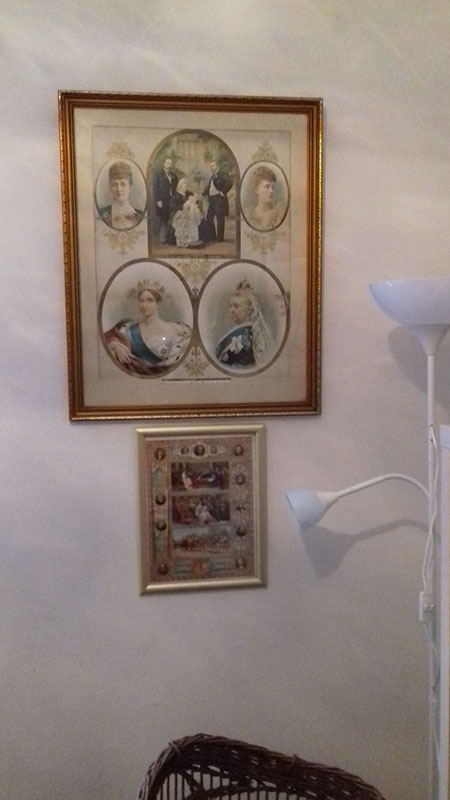
These were the times when the world was ruled by th eEuropean empires and where the heads of the empires and the royalty were intertwined with each other mainly through Prince Albert of Coburg (10 km away from Sonnefeld) and Queen Victoria.
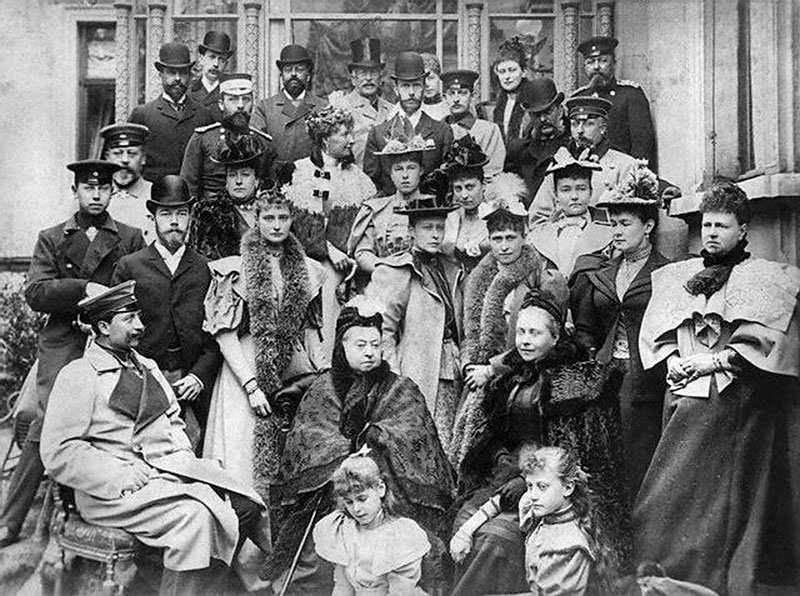
A photo of the Queen during her 1894 visit to Coburg tells it all. (see photoshowing her grandson Kaiser Wilhelm II sitting on her right side and Her son, who will be the next King of Great Britain in 1901, Edward VII who is two rows behind him.)
The photograph played an important part in us purchasing and renovating this "Jugendstil" property as we were investigating the link between the British and German royalty when we came across the Villa back in 2013.
2 Schutzenstrasse
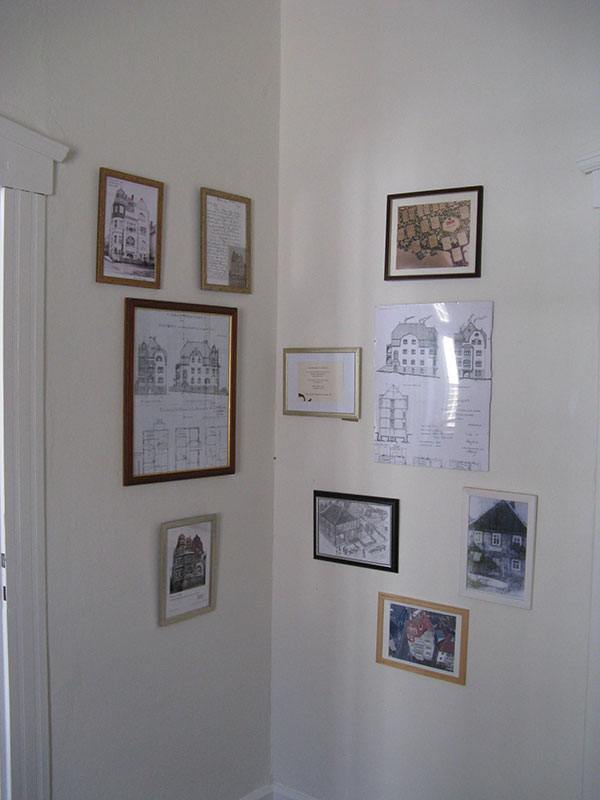
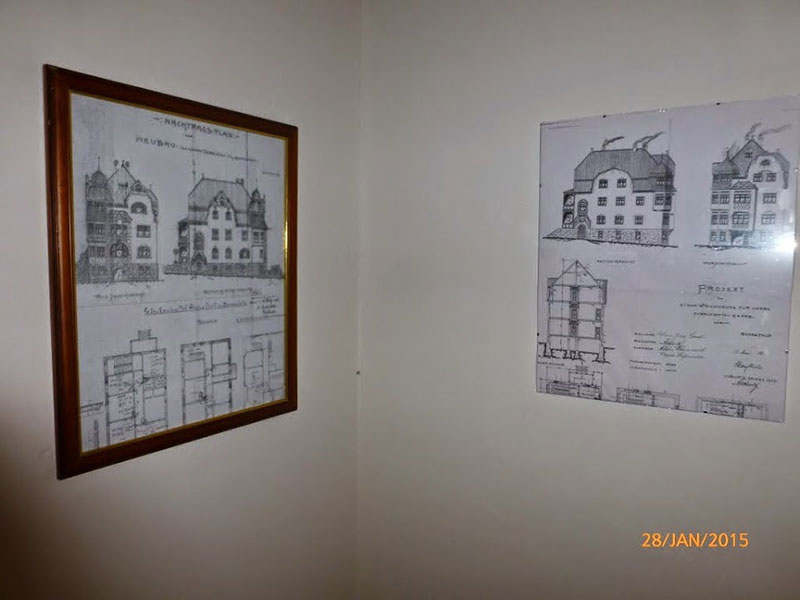
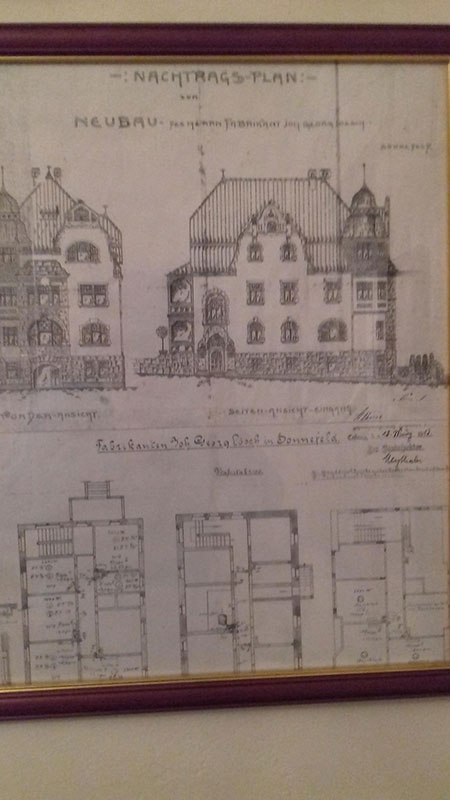
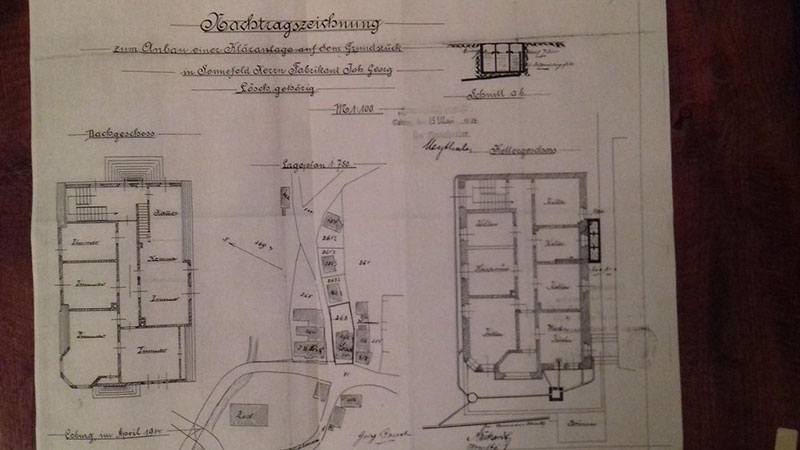
At No.2 Schutzenstrasse there was already a village house which Georg Loesch owned in the early 1900's and by 1910 he assigned the young architect August Eckhart (1877-1960) who had married his niece to come up with provisional designs for the Villa and also to pull down the existing village house.
In the late 19th century and early 20th century the modern and wealthy countries of Britain, France, Germany and the Low Countries were going through the period of the revolutionary art form known as "Art Nouveau" which was called "Jugendstil" ( young Style) in Germany & Austria.
The curved design and ideas of this movement had started with artists such as William Morris and Charlie Rennie & Margaret Mc'Donald Macintosh in Scotland and spread like wild fire across the continent through exhibitions and art schools and the artwork of painters such as Mucha, Klimt, Gaudi and Lalique on the Continent.
The design of this movement influenced a lot of contemporary architects who began shaping their buildings to incorporate a lot of the features of "Art Nouveau" and in Germany it shaped itself as the "Jugendstil " architecture.
The leading architects in Germany and Austria were Otto Wagner and his student Joseph Ulbricht as well as Peter Behrens and Victor Horta.
In Germany rich industrialists were employing such architects of this "young movement". The city of Darmstadt in particular was being adorned with new Villas' of this style.
Another city to follow the new movement was Coburg in the Ober Franken area. This little town of 50,000 population was of significance only because in 1840 their Prince Albert of Saxo-Coburg-Gotha had married the world's most powerful queen of the times, Victoria. Obviously, wealth and fame then poured into the town and the "nouveau rich "instructed the architects of their newly built Villa's to adapt the new style.
The chief architect in charge of the building regulations in Coburg during the "Jugendstil" period was Max Bohme ( 1870-1925 ) who was the chief of the department between 1903-1923. He had been to Darmstadt and worked together with Ulbrich for many years before he returned to his native Coburg. When Eckhardt submitted the plans of Loesch's new Villa in the " Jugendstil" style in 1912, it was down to Bohme to approve them and to control design during the construction period.
In 1911 the existing old village house at 2 Schutzenstrasse was pulled down and the foundations for the villa were laid in 1912. The sandstone used for the construction was of the highest quality and the timber used for construction, doors and frames were of the best hardwood available at the time.
By 1913 the externals of the building were finished. The building consisted of a major six room basement/ cellar, three floors each approximately 130 square meters in size, plus a very large loft area.
A beautiful corner turret with a tower and a spectacular spectre shaped pinnacle finished off the roofline of the building. Sandstone relief work carved by the Stonemasons adorned the front (a lovely carving of Cornucopia to the middle and peacock carvings to the top façade) and the side of the Villa where the main entrance door was located had Loesch's name and the year of completion (1913) carved over it.
The building and the windows were decorated with stained glass of excellent quality and the main window showing a cherub/putti enjoying the local grapes in abundance and scenery of Rheinstein castle from River Rhein and a circular pavilion by the sea side is an artwork in itself.
In addition the Villa has the reputation of being the first building in Sonnefeld with the then state of the art central heating system being installed and with decorative cast iron radiators (sadly all were sent away for melting down during the war years) in each room.
Most regrettably, when the building was inaugurated in 1914 and the Loesch family moved in, the First World War erupted. For Sonnefeld and nearby Coburg the declaration of war was an extraordinary and unbelievable situation as only twenty years ago Queen Victoria had her photograph taken standing in front of the Ehrenburg Palace in Coburg with her grandchildren Kaiser Wilhelm II on her right hand side and her son the future King of Great Britain Edward the VII two rows behind him.
Obviously, For the next four years with the war raging Loesch family business was affected and the family did not enjoy their newly built Villa as they should. Shortly after the war Georg's son Julius took over the business from his father.
In 1929 Georg Loesch died and the Villa, the business and the factory had passed onto his son Julius Loesch (1876-1970 ). Julius tried to revive the business in the 30's but unfortunately this time in 1939 the Second World War was declared and by the end of the 6 years of fighting Germany this time was in ruins.
It was the same for the Villa with its' interiors mostly neglected and the famous central heating system ripped out the building never had the opportunity to have the happy moments it enjoyed between the two wars.
Immediately after the war, the Old stoves were reinstalled and Julius' family lived in very poor conditions. His son Ulrich remembers his childhood in the villa shivering in cold as they had no coal to fire a light or any form of heating in the house during the war years.
The end of the war saw this part of Germany occupied by the US army and between 1948 and 1955 a garrison of 70-80 US soldiers were stationed in the building as the local headquarters of the U.S. garrison.
Sonnefelder's considered themselves extremely lucky as the Russian occupied East German border was only 8 miles from their own town and it was only due to Coburg being the residence of the British Royal family through Prince Albert that the town and its' suburbs were saved from falling into the hands of the Russian occupation.
After the withdrawal of The US troops, the Villa was returned back to the family. It was amazing that none of the American soldiers had smashed a bottle through the magnificent stained glass windows during this period and they windows survived the war with slight damage but intact.
Fifteen years later Julius died at the grand age of 94 during the year of 1970.
By that time the Villa had passed on to his three daughters Kathe, Marichen and Erna and the business was handed over to his son Hugo (1905-1995).
By 1972 Germany had come up with the listed building registration law and Villa Loesch was put under " Denkmal Schutz" listed building category with Reg. No. D-4-73-166-14
1979 saw the 100th anniversary of the founding of the Loesch business and the factory and the business started improving after a very long period of decline. The wicker furniture fashion of the 1880's to 1940's was now replaced with upholstered furniture and baby prams. Loesch business was now moving into manufacturing parts of the seats these baby prams used. The proximity of the east German border was proving to be a good source of income as the supplies and deliveries of finished goods was going through Sonnefeld and its' environs and the Pram makers and the upholstery business were enjoying good times.
However, this all changed in 1990 when East and West Germany unified and now with the borders removed, towns like Sonnefeld lost their significance and the production moved elsewhere. By 1995 Hugo had died and the business had passed onto his son Ulrich. Unfortunately Within a period of 10-15 years of the wall coming down and the trade being affected, a lot of businesses in and around Sonnefeld closed down including the Loesch factory in 2004.
By then the three daughters of Julius had moved out and had settled elsewhere and their flats were rented out, although Kathe had come back in the nineties and was living in the entrance floor (adorned by the gorgeous stained glass windows), she also passed away in 2005 and the building was abandoned.
It was then decided that the vacant building should be sold to a local person, who then sold it to a local company which in turn stripped of all the internals.
The company applied for a major architectural and design change to the Villa including replacing the original stained glass windows but had to apply to the "Denkmal Schutz" (Listed Buildings authority) when such changes were refused. All this took couple of years and by 2010 the vacant Villa was sold again to a private individual in Lichtenfels, who had bought it for his son to renovate. However his son was not interested in the work and by 2011 the Villa was put up for sale again. For the next two years nobody wanted to buy the Villa due to its' internal condition despite the fact that it was of sound structure externally. In Germany old and listed buildings are considered to be very expensive to renovate and energy inefficient hence not many buyers come forward and the sale price drops sharply. I learned later on that the seller was so desperate in 2012 that he even had offered the Villa for exchange for a car, unofficially.
I saw the Villa by coincidence when I came as a visitor to Coburg in 2013 trying to find the link between the Isle of Wight and Coburg town and Queen Victoria and Prince Albert and to understand what the dynasty name " Saxe CoburgGotha " ( Sachsen- Coburg-Gotha) was standing for. As a tourist, window shopping at the estate agents in Coburg and later on the internet, I saw the photos of the sad looking Villa, quickly organised a viewing and fell in love at first sight with the Jugendstil architectural features and the lovely original stained glass windows of the building.
Renovations and Recognition
Having purchased the Villa within a couple of months for what we would call a " Tuppence" back at home in England, we started investigating how to renovate this lovely building back to what it was hundred years ago and to provide it with the happiness it so much deserved.
Most of 2013 was spent finding local craftsman who would help with the renovation works and by 2014 we had appointed most of the trades necessary to do the job.
It took around two and a half years and with the tremendous help of local craftsman, the Villa was re shaped internally preserving every bit of original features, re instating the central heating systems after hundred years, kitchen's, modern bathrooms were put in so that the Villa could be put back into use as a 21st Century building but with all the glamour and greatness of its' "Jugendstil" days.
We were extremely pleased when we heard that the Denkmal offices based in Schloss Seehof near Bamberg responsible for the Oberfranken area recommended the Villa for a renovation prize and we collected our prize from the "President of the Oberfranken Stiftung “ in September 2016 during a ceremony held at the gorgeous monastery of Ebrach.
The Villa is now back into its' heydays, serving the purpose for which it was built by Georg Loesch some one hundred years ago. We thanked all of the craftsman who helped with the renovation of the Villa back in 2015 and also organised a get together with some of the descendants of Georg Loesch some who still live close by. We invited "Denkmal Schutz" department to thank them for their support during the renovation years
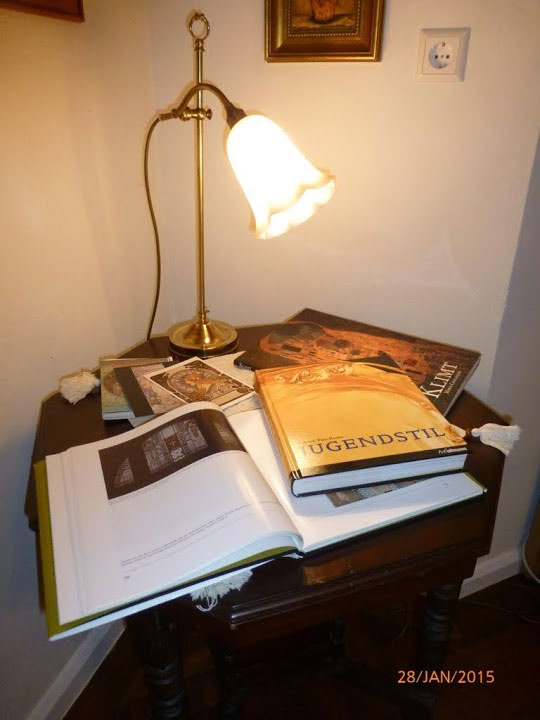
At present, the entrance floor of the building is used as a holiday home for ourselves only to enjoy the atmosphere of the yesteryear (Grunderzeit) also the artwork on the gorgeous stained glass windows. The interiors of the apartment have been designed and decorated and furnished to reflect on the " Jugendstil " days of the Villa going back hundred years. As we find more artefacts of the period over the next few years, we will bring them to the Apartment to complement the display of items of interest.
The two upper floors are now occupied by two families and a total of five children running up and down the great stairwell. Their voices and laughter echoing in the rooms and corridors remind us of the great days of the Villa as it was a century ago.
I am sure Georg Loesch and his descendants must be extremely pleased that their beloved Villa is now back in full use to its' maximum potential and is in good hands & to be handed over to the future generations in a good shape.